
Immigrant Strong: July 2026 Issue
On fear and shame, female friendship, and living and dying away from the homeland

Hi there,
This has been a stressful month with some concerning health issues involving a parent, and many of you know how difficult it is to live in a different country from your aging immigrant parents.
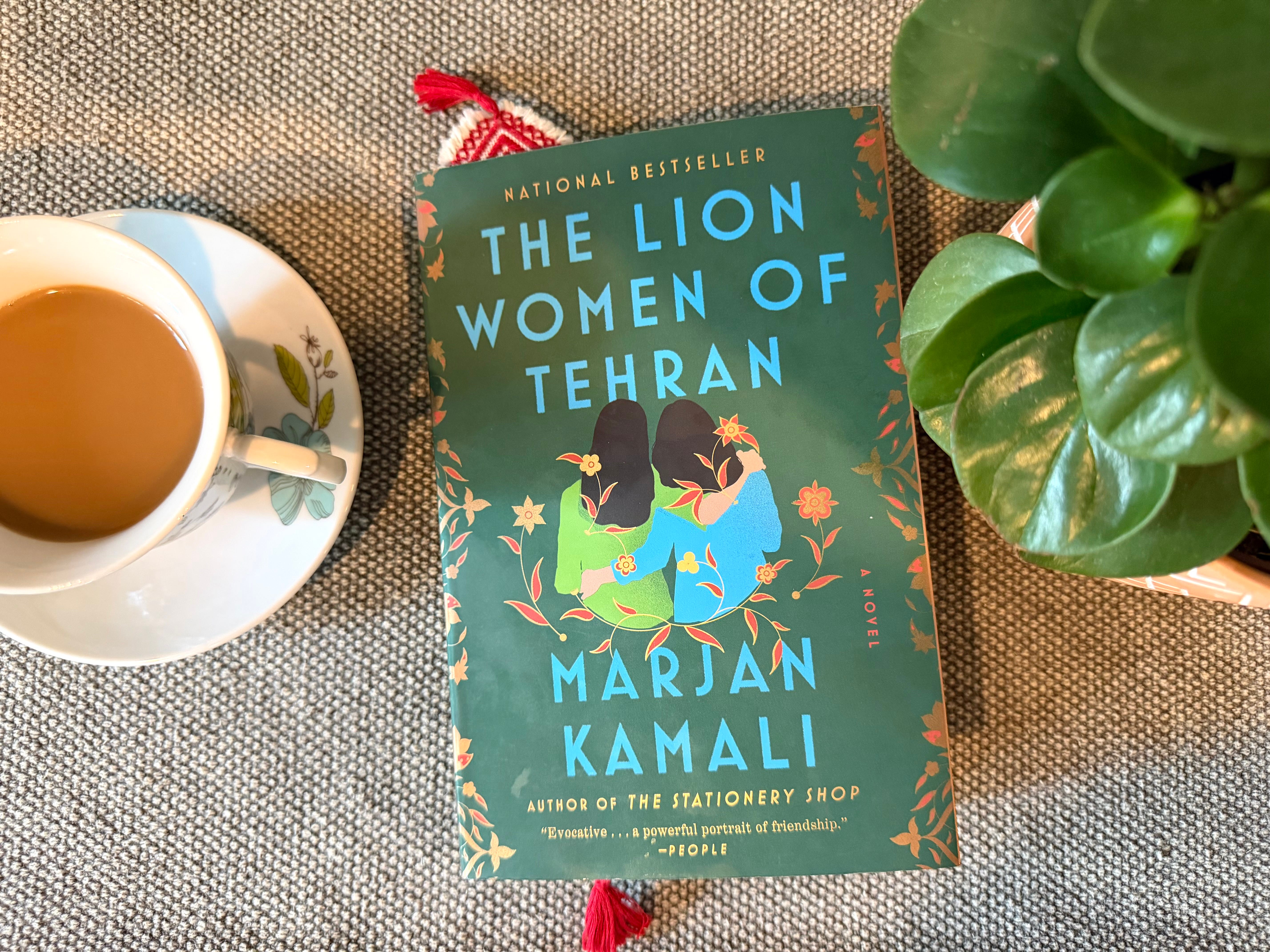
I’m still reading this month’s featured book, but wanted to give a shout out to Marjan Kamali’s The Lion Women of Tehran. I’ve been thinking a lot lately about birth families v. chosen families and the power of women’s friendship, which this book tackles.
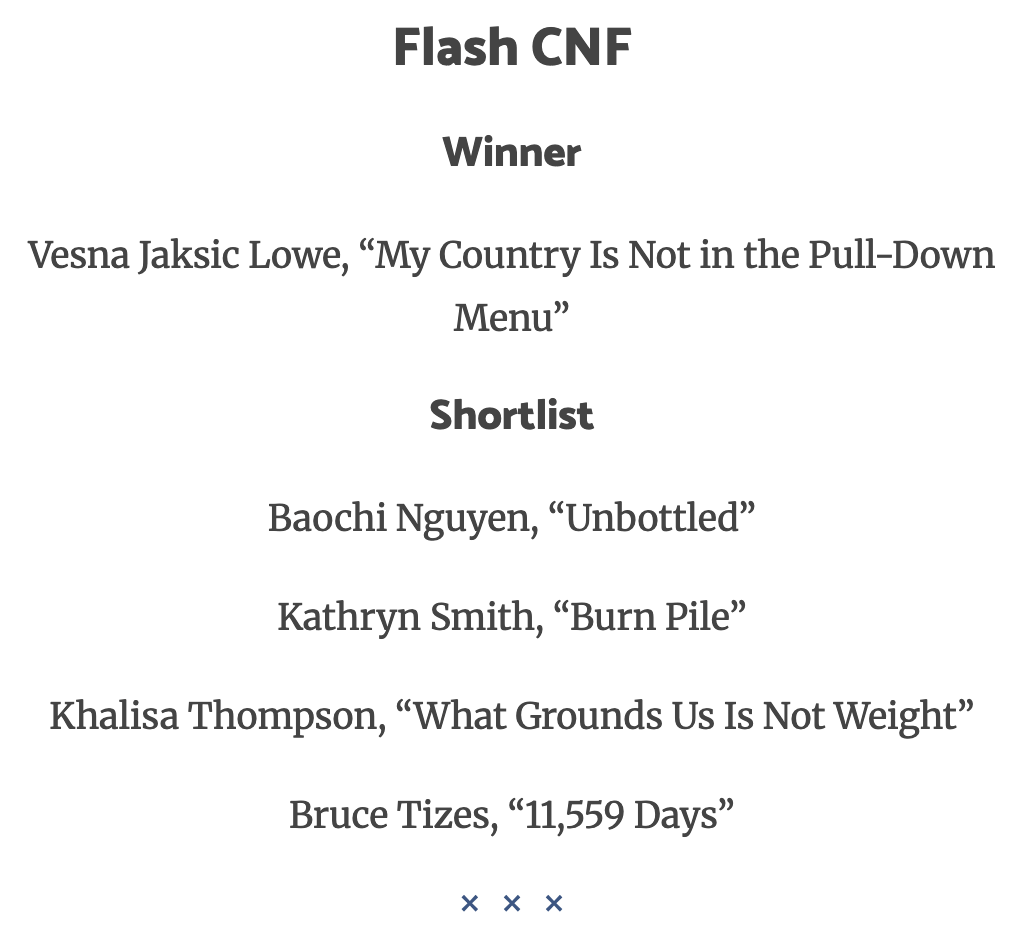
Amidst life’s difficulties, I’m savoring any joys and good news that come along so I’m happy to share I won first prize in CRAFT Literary’s Creative Nonfiction Flash contest. It’s one of my favorite lit mags and it’s so special that I wrote this piece following a prompt in my first-ever in-person creative writing workshop at the Kenyon Review a couple of years ago. Look out for my piece, “My Country is Not in the Pull-Down Menu” and an accompanying author’s note and all the other pieces in early September.
Essays and Interviews
For the Brevity Blog, here is a A Conversation Between Immigrant Writers on Shame, Fear, and Responsibility, with Rebecca Morrison and Hamid Ran.
“When you’re an immigrant writing about your culture and your family, there can be such a heaviness to that responsibility. Iran has been defined in the media by so many stereotypes. When you’re writing into that space, you know for some readers, this may be the first Iranian story they’ve ever read. That creates a lot of pressure. I wanted to be truthful about my experience, and I wanted to write about the beautiful parts of Persian culture but I also wanted to be honest about some of the harder things I saw growing up, especially for girls and women.”
This essay broke me in a million pieces. For LitHub, here is Natalie Bakopoulos’ The Old Streets of Athens: On Living and Dying Away From One’s Homeland.
“If my father had the nostalgia of the exile, he hid it well. In many ways, the exile has no other choice. Or, it was a particular kind of controlled nostalgia. He was, as Svetlyana Boym notes of first-wave immigrants, “often notoriously unsentimental, leaving the search for roots to their children and grandchildren…Somehow the deeper the loss, the harder it was to engage in public mourning.” Looking back, like Lot’s wife, she notes, can paralyze you forever; looking back, like Orpheus, can cause harm to those you love.”
I met the lovely and talented Lu Han at Martha’s Vineyard Institute of Creative Writing’s conference a couple of years ago; it was wonderful to come across her thoughtful Michigan Quarterly Review interview, Portrait of a Japanese-American family during WWII: An interview with D.K. Furutani.
“As I got further into learning about the history of Japanese Americans and the methods they explored in resolving feelings about their incarceration, I felt the pull of a more creative outlet for certain characters, expressing themselves through a letter, or through a poem or story they wrote. Being able to do that was a really enriching writing experience. That’s when I felt I was closest with the characters. Thinking about how a character would phrase something, or what image they would come up with in a poem—these were the most rewarding and entertaining parts of writing this.”
I’ve featured Weike Wang’s work here before and have long enjoyed her clever and funny writing style. For Electric Literature, here is Why Do I Keep Coming Back to Trains?
“Trains in China are much faster and when they reach top speeds, display that number on digital overhead signs. Trains in Europe are also faster but don’t display speeds, just the time and next stop. Signs on the Amtrak say EXIT in all caps, then in much smaller font, either “restroom this end” or “restroom, the other end” but because the signs are at the end of each car, you have to walk to one end anyway to confirm or negate a bathroom’s existence.”
For The Los Angeles Review of Books, Amy Y.Q. Lin interviewed Sarah Wang in The Body and Other Sites of Resistance.
“Also, there’s a depth of understanding inside of me of a place and people that I’ll never have anywhere else I go. In Los Angeles, so many places I frequent feel predominantly Chinese. There are restaurants I go into where the menus are only written in Chinese, and I have to ask my mother what this is or what that is. A lot of people only speak Chinese. So on top of that feeling of being native in Los Angeles, it extends to ethnicity and culture. I feel belonging in a way there with all kinds of immigrants. I feel a sense of place there that I don’t feel anywhere else. It’s not only special but also affirming.”
I’ll wrap it up with Ankur Parikh’s beautiful piece in the Offing, Halalala.
“My father once told me that in India there were doorways you were not supposed to cross. Temple thresholds that required bare feet, rituals, the right caste. He crossed them anyway, he said. He did not believe in such rules.
But then he came here, where every door was supposed to be open, and he found new thresholds, invisible ones. Like doors that closed when you spoke with an accent.”
Thanks for reading,
Vesna
About this newsletter: Writing about immigrant and refugee life—the struggles, triumphs, and quirks—by those with immigrant and refugee roots, and others living between countries and cultures. For more info, here is a Q&A I did with Longreads about the newsletter. Photo in the logo: Miguel Bruna/Unsplash.
About me: I grew up in the former Yugoslavia, then immigrated to Canada, and now live in the United States, where I work as a writer for nonprofits in the human rights and international affairs fields. I have written for three anthologies (Back Where I Came From: On Culture, Identity, and Home; Connecticut Literary Anthology 2024; and Connecticut Literary Anthology 2023) as well as Electric Literature, The Los Angeles Review of Books, The New York Times, Pigeon Pages, the Washington Post, the New York Daily News, and Catapult, among others. I was a fellow at the Virginia Center for Creative Arts (‘26), Writer in Residence at Hedgebrook (‘25), participated in Tin House (‘24 and ‘21) and Kenyon Review (‘24) workshops, and won the Poet & Author (‘24) and Parent Writer (‘20) fellowships from Martha’s Vineyard Institute of Creative Writing. Find me on Instagram and Bluesky.
Congratulations on the essay prize!! Thank you for sharing the Weike Wang essay - oh my goodness, I loved that piece!
Sending love <3
Congratulations, Vesna! And thanks for this insightful post.