
Immigrant Strong: June 2026 Issue
On World Cup fever, remembering an Iranian writer, and American subjectivity

This newsletter is going out on the last day of June because my household has gone bananas—between our daughter’s graduation, the Knicks winning the NBA finals, and Croatia making it into the World Cup knockout round, June has been a riveting rollercoaster filled with tears, sports fandom, and the joy and agony that accompany it.
Last week, I went to my first World Cup game and saw Croatia win in my former hometown of Toronto. The city is home to some 130,000 Croats—Croatia’s largest diaspora in North America—and I was among thousands who flooded it with red-and-white checkers. I adore the World Cup for how it brings people and countries together, and it was a thrill to experience it in a majority-minority city that consistently ranks among the most multicultural in the world.
After Croatia beat Panama, we danced and sang with Panamanians (some still wearing their straw hats) and when Croatia topped Ghana, two Ghanaian women were among the first to warmly congratulate me when they saw me in my Croatian jersey. Oh, and coming from the Balkans means having multiple teams to cheer for (Go, Bosnia!)
I’m a sucker for the Olympics and the World Cup and relish seeing all the flags, fans, diversity, and the power of sport to unite and inspire. For this international affairs major and former Division I athlete, it’s an electrifying collision of so many things that bring me joy. I wish we’d embrace some of these habits year-round—learning about other countries and traditions, flying international flags everywhere, and honoring so many immigrants representing their countries on the world’s biggest stage.
When else do we get to see Scotland’s Tartan Army run Boston dry; Norwegians turn Times Square into Viking Row; Congolese soccer players honoring their country’s leopard pattern in their first World Cup appearance since 1974; and the tiny Caribbean nation of Curacao becoming the smallest country to make the World Cup.
As for Croatia, we are a country with more people living in the diaspora than at home. We are tall, loud, and proud. We are crazy about soccer and sports in general, we celebrate everything in community, and we hardly do anything without singing together. We have a decorated World Cup history—a nation of less than 4 million that placed third and second in the last two World Cups, with the legendary Luka Modrić, 40, at the helm. Whatever happens against Portugal on Thursday, you can bet Croats will be marching on Toronto’s streets and rolling out the giant checkered flag, singing Croatian songs on top of their lungs at the stadium hours before kickoff, and maybe even crashing another wedding. I’m here for all of it. Naprijed, Vatreni!
Book
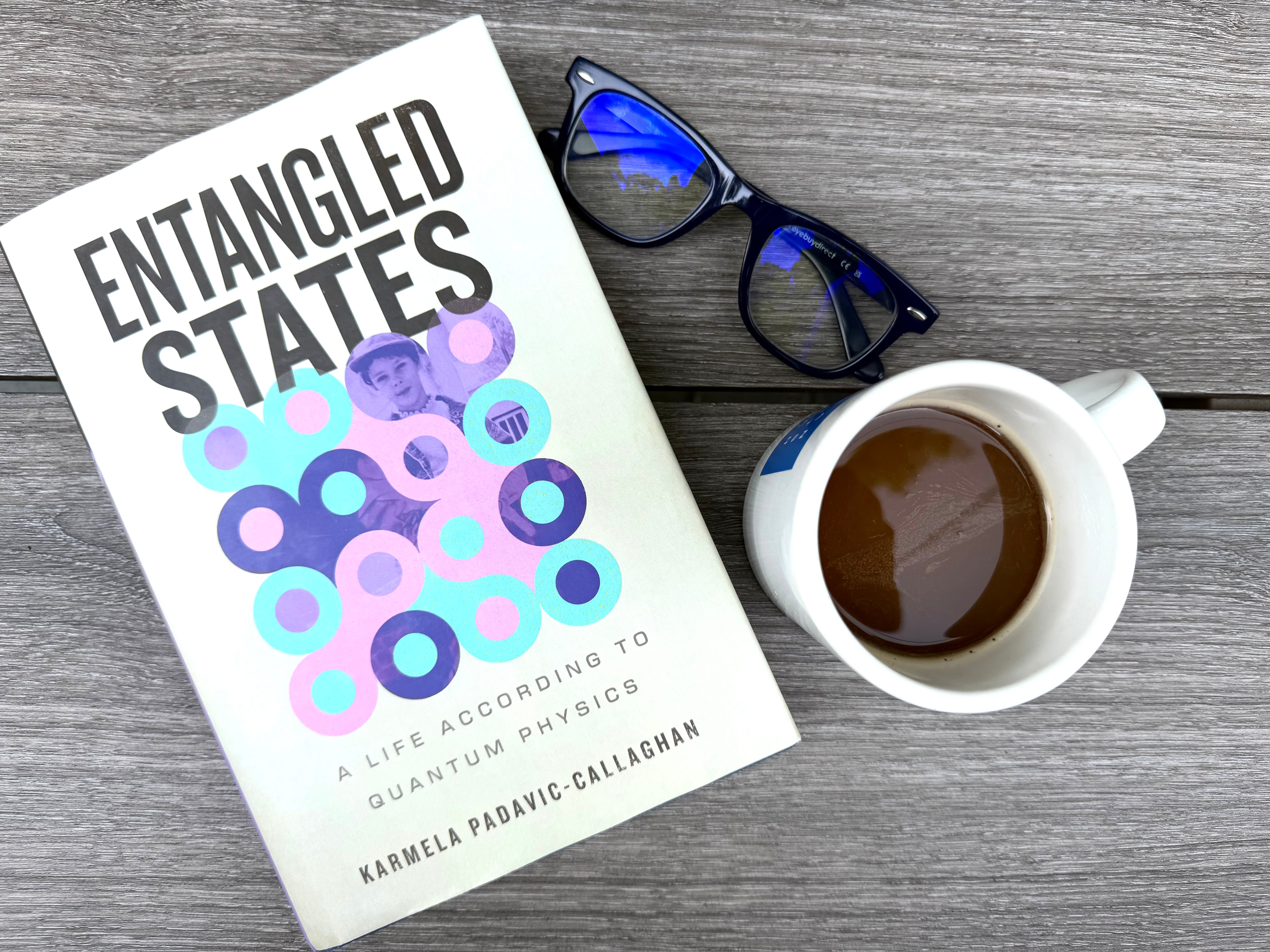
Given the Croatia-heavy content in the intro, I’m so happy to introduce a New York-based writer who hails from Croatia. I’m more than halfway through their book and while it’s reminded me of my limited scientific knowledge, I’ve really enjoyed Karmela Padavic-Callaghan’s Entangled States: A Life According to Quantum Physics. The book smartly (not surprisingly, the author has a PhD in physics) merges science writing with memoir and will appeal to many readers who don’t perfectly fit in any box, whether in regard to their gender, sexual orientation, national identity, or more. Padavic-Callaghan writes with a scientist’s sharpness and observational power about what it means to be a queer, non-binary immigrant and find belonging and build a career between the edges of rigid societal expectations.
Essays
I was so sad to hear about Marjane Satrapi’s death. In this heart-wrenching essay, Naz Riahi beautifully captures what it meant to read another Iranian writer. For LitHub, here is Merci, Marjane: What the Author Meant to Me as an Iranian in Exile.
“I came here, to this country, with my mother. Both of us, refugees from Iran. I was nine. I came with a backpack full of books and a suitcase full of clothes. I brought one Cabbage Patch doll, one stuffed animal, a fox I’d had since birth, passed down to me by my older brother, and a one square foot powder blue quilt that I gripped to my chest each night, since I could remember. I called her azizam. Dear one.”
I related to many things in Naz’s essay and had some of the same reactions when the former Yugoslavian writer Slavenka Drakulić died earlier this month.
For the Los Angeles Review of Books, Nyuol Lueth Tong writes about reading Robert Frost in newly independent South Sudan in How Does a Country Sound?
“I thought of this as I anticipated my own arrival at a border that had become, overnight, international. I was returning not to the old Sudan of my childhood but to a place newly named South Sudan—a wall inscribed on the map after decades of war and negotiation. “Good fences make good neighbors,” the saying went. But what if the wall, once drawn, revealed more fractures within than between?”
I love coming across friends’ bylines; here is Leila Nadir’s Electric Literature interview with Bobuq Sayed—A Debut Novel That Exposes the Ugliness of American Subjectivity.
“I wanted the third space to present other identity formations and relationship types. When we rid ourselves of this language of who am I and where do I belong, when we begin from the premise that none of us belong here, what other indexes of power emerge? What are the subterranean tensions and motivations that are hidden until that undressing takes place?”
Falencia Jean-Francois introduces us to nine characters in this Electric Literature reading list, Queerness Is an Essential Part of Haiti’s Story.
“To know queer and trans Haitians is to understand that we are human. Because of the stigma that continues to plague us, most people will only have the opportunity to get to know us through words on the page.”
As the United States’ seemingly endless appetite for war grows, it’s important to read about the effects of our government’s horrific actions. For LitHub, Shohren Laici wrote My Mother’s Voice: Messages from Tehran.
“I looked around my apartment in upstate New York. The Valentine’s Day balloons from a few weeks before were still hanging, but everything felt different. My home had instantly become a house of mourning. I began screaming and sobbing, hitting my face. I threw my phone, still playing a newsreel, across the room.
This was how the war began for me.”
Thanks for reading,
Vesna


About this newsletter: Writing about immigrant and refugee life—the struggles, triumphs, and quirks—by those with immigrant and refugee roots, and others living between countries and cultures. For more info, here is a Q&A I did with Longreads about the newsletter. Photo in the logo: Miguel Bruna/Unsplash.
About me: I grew up in the former Yugoslavia, then immigrated to Canada, and now live in the United States, where I work as a writer for nonprofits in the human rights and international affairs fields. I have written for three anthologies (Back Where I Came From: On Culture, Identity, and Home; Connecticut Literary Anthology 2024; and Connecticut Literary Anthology 2023) as well as Electric Literature, The Los Angeles Review of Books, The New York Times, Pigeon Pages, the Washington Post, the New York Daily News, and Catapult, among others. I was a fellow at the Virginia Center for Creative Arts (‘26), Writer in Residence at Hedgebrook (‘25), participated in Tin House (‘24 and ‘21) and Kenyon Review (‘24) workshops, and won the Poet & Author (‘24) and Parent Writer (‘20) fellowships from Martha’s Vineyard Institute of Creative Writing. Find me on Instagram and Bluesky.
The best to see you a few weeks ago!! <3
The Marjane Satrapi news is so, so sad <3
Amazing you got to see Vatreni at the World Cup!